Fuel economy drives innovation.
 By Consumer Reports Staff | ConsumerReports.org – Thu, Sep 8, 2011 1:46 PM EDT
Rising
oil prices and tougher fuel-economy requirements are the inspiration
for the latest wave of fuel-saving vehicles. Prominent among them are
more small cars, gas-electric hybrids, and electric cars. However, many
larger mainstream vehicles are being tweaked to improve their gas
mileage by more conventional means, such as innovations in
turbocharging, weight reduction, aerodynamics, and direct fuel
injection.
MORE AT CONSUMERREPORTS.ORG
Moreover,
even the least expensive cars will have improved safety features,
because federal laws now require antilock brakes and electronic
stability control as standard equipment on all cars and light trucks.
And backup cameras are becoming common, especially on SUVs, where
they’re often needed the most.
Here’s our take on some of the most notable new models.
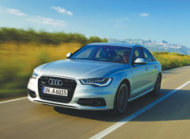
Audi A6
Summer 2011
The
A6 redesign features lighter aluminum body panels and a
direct-injection 310-hp 3.0-liter V6 mated to an eight-speed automatic
transmission to help improve fuel economy. The base engine is a
turbocharged 2.0-liter four-cylinder good for 211 hp paired with a CVT.
The front wheels have been moved farther forward, allowing for more
cabin room, and the MMI driver-interaction system is said to be a bit
easier to operate. Available gadgets include a color heads-up display, a
night-vision display, and LED headlights.
Bottom line: It’s significant that
Audi and
BMW are bringing four-cylinder engines to their elite sedans.
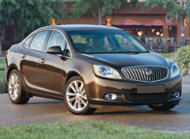
Buick Verano
Late 2011
The smallest Buick in decades is an entry-level sedan based on the
Chevrolet Cruze. But it uses the same more powerful 177-hp four-cylinder engine and six-speed automatic transmission as the larger
Regal.
The Verano has a touch-screen navigation system and uses advanced
sound-deadening techniques. Higher trims will offer a heated steering
wheel and other plush features.
Bottom line: This compact yet upscale Buick will be a welcome addition for consumers who want luxury features without going to a larger car.
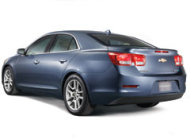
Chevrolet Malibu
Early 2012
The
Chevrolet Malibu’s redesign shares underpinnings with the Buick Regal,
an agile and well-finished car that did quite well in our road tests.
The new Malibu is a bit wider than before, but its wheelbase is about
4.5 inches shorter. The primary engine is a 190-hp four-cylinder, but a
mild hybrid system called eAssist, Chevrolet claims, yields 26 mpg in
the city and 38 on the highway.
Bottom line: The Malibu will come up against some stiff competition in this segment from midsized stalwarts such as the
Nissan Altima,
Honda Accord, and
Toyota Camry.
But if the Malibu retains the Buick Regal’s ride, handling, and
interior quality, it should become a strong competitor. Notably, the new
Malibu won’t be offered with a V6 engine.
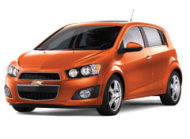
Chevrolet Sonic
Fall 2011
The
Korean-designed, U.S.-built Sonic is a serious attempt by General
Motors to gain traction in the subcompact market now dominated by cars
like the
Honda Fit and
Nissan Versa. A four-door hatch and sedan are available, as they were for the
Aveo
it replaces. They are both relatively roomy and are powered by the same
engines used in the larger Chevrolet Cruze, a 1.8-liter four-cylinder
or an optional turbocharged 1.4-liter four-cylinder. The Sonic’s long
list of safety features includes 10 air bags.
Bottom line: Our early drives with a preproduction model last winter indicate that the Sonic is far more competitive than the Aveo.
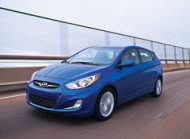
Hyundai Accent
Summer 2011
The
redesigned Accent subcompact is available as a sedan or hatch. Its
interior is relatively spacious and well finished. Its new 138-hp
four-cylinder direct-injection engine gets an EPA estimated 30/40
(city/highway) mpg. Standard features include six air bags and active
front head restraints but not cruise control. Both transmissions, an
automatic and a manual, are six-speed.
Bottom line: The Accent is about sound, affordable transportation. But the interior feels cheap, and the cabin is noisy.
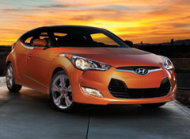
Hyundai Veloster
Fall 2011
The
Veloster is a small two-door sports coupe, but there’s a well-concealed
rear door on the passenger side that grants access to a two-person rear
seating area. The interior design is glitzy-modern with metallic grab
handles on the center console and on the front doors. The powertrain,
like the one in the new Accent, is a 138-hp four-cylinder
direct-injection engine mated to a six-speed manual or automatic
transmission. The Environmental Protection Agency rates the Veloster’s
fuel economy at 40 mpg on the highway and 30 in the city, putting it on
par with the
Honda CR-Z hybrid.
Bottom line:
It’s hard to believe that the miserly fuel economy will allow for much
giddyap, but agile handling could trump the need for speed here.
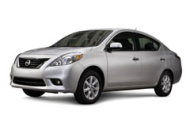
Nissan Versa
Fall 2011
The
redesigned Versa bows as a sedan, and a hatchback will follow in spring
2012. We liked the outgoing Versa; its best features were an upscale
interior and spacious rear seat, which continue in the redesign. The new
car is about the same size as the old one but lower and lighter, with a
smaller engine bay and larger trunk. The new engine is an advanced
109-hp, 1.6-liter four-cylinder with a five-speed manual or continuously
variable transmission. Nissan says combined city/highway fuel economy
should improve to 33 mpg.
Bottom line: If the
new engine has sufficient pep, this car should do well. Nissan touts a
starting price of less than $11,000, but you’ll probably pay about
$16,000 for a well-equipped version.
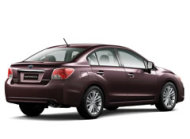
Subaru Impreza
Fall 2011
The
Impreza redesign has a longer wheelbase, more rear leg room, and an
upgraded interior. Subaru claims that the new 148-hp, 2.0-liter
four-cylinder engine gets 30 percent better fuel economy than the
previous model. The new continuously variable transmission should be a
step up from the four-speed automatic it replaces.
Bottom line:
The Impreza has been a good, reliable car for years, but its standard
all-wheel drive hurt fuel economy. If Subaru has addressed that
shortcoming while making the interior larger and quieter, as claimed,
that’s a big plus.
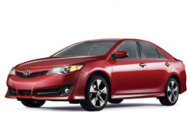
Toyota Camry
Fall 2011
The
new Camry doesn’t stray far from its traditional recipe. It comes with a
four-cylinder, a hybrid, and a V6. Trim lines range from the base L to
the LE, XLE, and a mildly sporty SE. Powertrains carry over from the
previous model. The new electric power steering should contribute to
improved fuel economy.
Bottom line: We would
expect the Camry to retain its comfortable ride and quiet interior and
hope the interior quality doesn’t backslide, as it has in some recent
Toyotas.
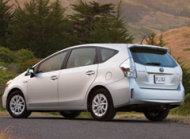
Toyota Prius V
Fall 2011
The
Prius V is an enlarged-wagon version of a regular Prius, slightly
taller, 6 inches longer, and an inch wider. Toyota claims that cargo
space has grown by more than 50 percent over the hatchback model’s. It
uses the same 1.8-liter four-cylinder engine as the basic Prius, but EPA
fuel economy, although still excellent, is considerably less, 44 mpg in
the city and 40 on the highway. The Prius V introduces the Entune
infotainment system, which delivers telematics services and Web apps
(see Connected cars: A new risk). A weight-saving moonroof is optional
on the high-end trim line.
Bottom line: The V provides more cargo space than a hatchback or sedan and better fuel economy than an SUV or wagon.
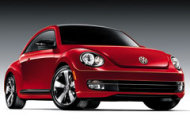
Volkswagen Beetle
Fall 2011
For 2012
VW
introduces the second generation of the reincarnated Beetle. It’s wider
and longer than the last one, and the trunk and cabin are much roomier,
making the car a more practical choice. The base five-cylinder engine
is rated at 170 hp, and a 200-hp turbocharged four-cylinder and 140-hp
diesel are available.
Bottom line: More space
and power might breathe new life into the retro Beetle. But lower-trim
Beetles have rather cheap interior plastics, examples of the
cost-cutting strategy that hurt the 2011 Jetta (available to
subscribers) sedan we tested.
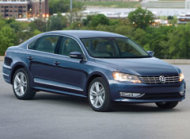
Volkswagen Passat
Summer 2011
The
redesigned Passat is larger than the previous version. The interior
looks solid, with a soft-touch dash and switches, buttons and knobs that
it shares with the well-executed Touareg. A 170-hp five-cylinder is the
base engine, which is also found in the Jetta (available to
subscribers). The higher-end engine is a 280-hp V6. A 140-hp 2.0-liter
diesel that Volkswagen says will get 43 mpg on the highway will be
available. All-wheel drive will be optional.
Bottom line:
If Volkswagen’s new emphasis on value pricing doesn’t cut corners, then
the new Passat might be a solid competitor. But it has lost some of the
sharpness of its predecessors.
Electric cars hit the road
They’re cheaper to run but not suitable for everyone
Electric
vehicles are finally appearing in showrooms. We’ve been testing the
first modern one available, the $35,430 Nissan Leaf, for some months. It
works well for running errands and on short trips, climbing hills
effortlessly and riding comfortably and quietly. The range per charge
hovers around 75 to 80 miles (65 when the weather is cold), so long
journeys are out of the question without added charging opportunities.
Electric vehicle purchases currently qualify for a federal income tax credit of up to $7,500.
Here are other electrics you might see on the road soon:
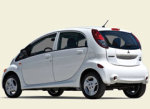
Mitsubishi i
At
$27,990, the “i” will be the cheapest electric vehicle to date when it
goes on sale early next year. It’s a tiny four-door hatchback that uses a
66-hp electric motor to power the rear wheels. The “i” is rated by the
Environmental Protection Agency at 126 MPGe (the miles-per-gallon
gasoline equivalent) in the city and 99 MPGe on the highway (112 MPGe
combined). The EPA says the range is 62 miles, compared with 75 for the
Nissan Leaf.
Ford Focus Electric
Due
late this year in selected areas, the Focus Electric is a five-door
hatchback based on the redesigned Focus hatchback. The driving range is
claimed to be about 100 miles per charge. Onboard electronics allow
reduced charge times: Ford says a full charge will take only 3 to 4
hours (about half of what a Leaf takes). We like the gas-powered
version’s handling, agility, and ride control of the Focus; the
immediate power delivery should make it even more fun to drive. Ford has
yet to announce the cost of the Focus Electric; it probably will be
between a Nissan Leaf and Chevrolet Volt.
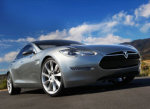
Tesla Model S
This
long-awaited luxury hatchback is scheduled to start production in early
2012. The sleek Model S also has a tiny rear-facing third seat. A
choice of battery packs supply a claimed range of 160 to 300 miles.
Retail is estimated at $70,000 to $80,000.
Posting source:
http://autos.yahoo.com/news/new-car-preview.html